The Problem: The Single-Point-of-Failure Bottleneck
Before partnering with Telkoware, Accurate Fishing’s supply chain suffered from a highly manual, reactive procurement process. They manage hundreds of distinct SKUs and specialized components, each with unique supplier constraints.
Their operations relied on weekly or biweekly low-stock reports pulled manually from their legacy FileMaker Pro database. If an item dipped below a static minimum threshold (e.g., 500 units), it triggered a manual review. The procurement lead then had to manually calculate supplier lead times, account for Minimum Order Quantities (MOQs), assess shipping thresholds, and attempt to group purchases from the same supplier to optimize freight costs.
Because this logic was not codified in any system, the entire procurement ecosystem relied on the tribal knowledge and experience of a single person. This resulted in delayed purchase orders, reactive rush-shipping, and missed opportunities to consolidate freight, directly impacting their gross margins.
The Approach: Predictive AI with a Legacy System of Record
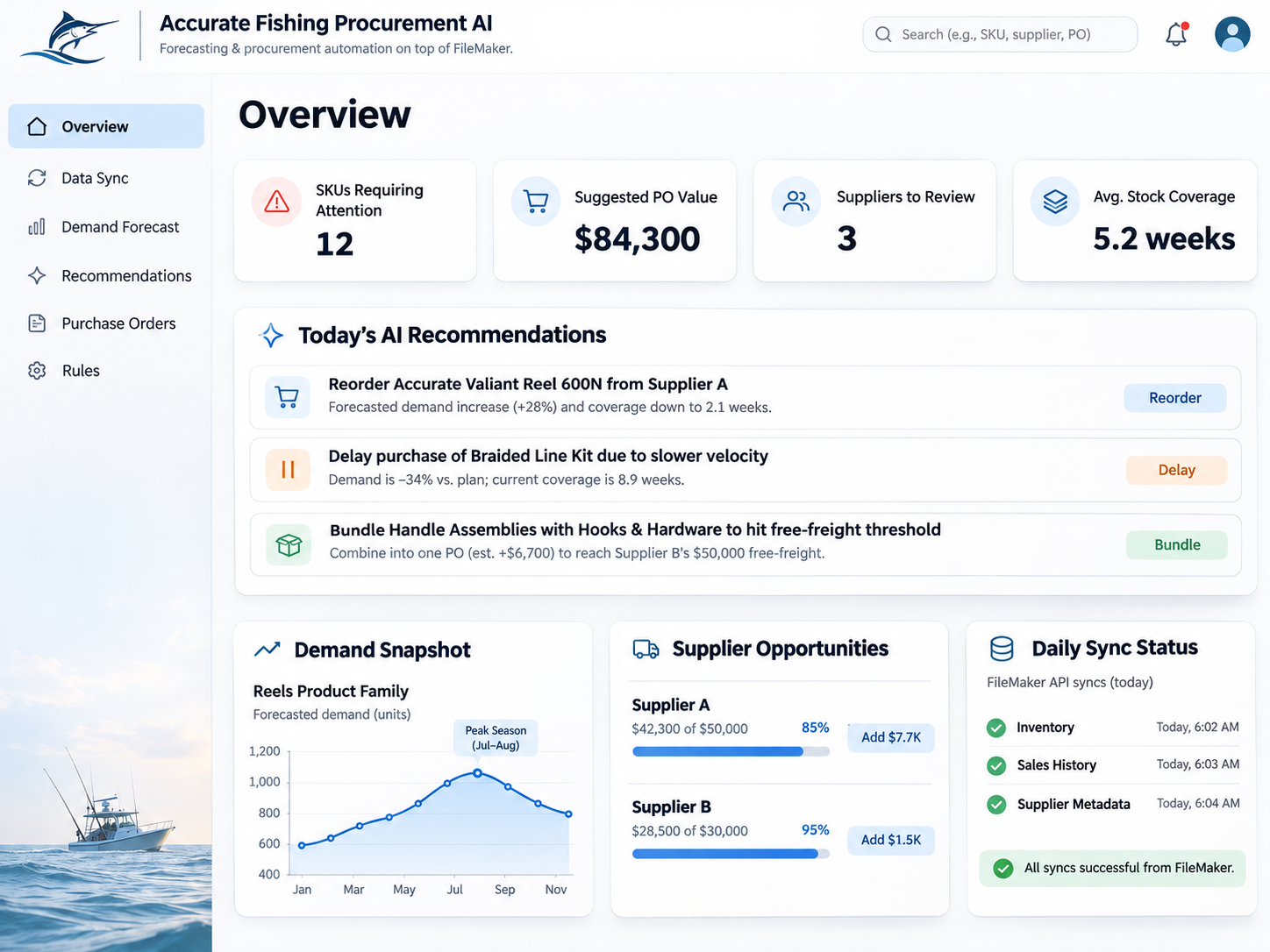
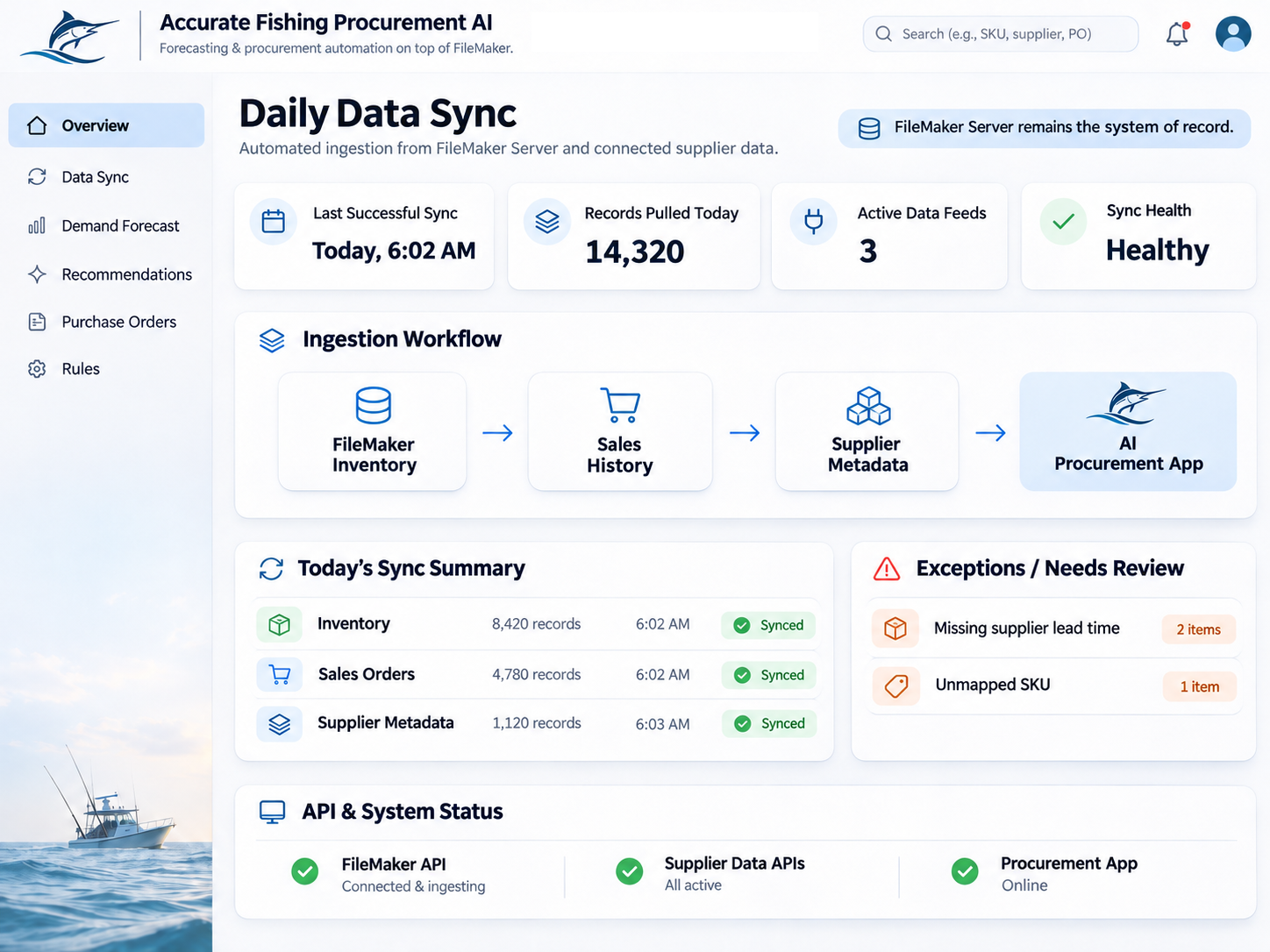
Telkoware architected an automation solution that modernized their forecasting without forcing a costly migration away from their existing database. We designed an AI-based web application that sits on top of their infrastructure, preserving FileMaker Server as the absolute system of record.
The architecture we deployed operates as follows:
- Automated Daily Ingestion: The AI web app pulls daily inventory levels, supplier metadata, and historical sales data directly from FileMaker via API.
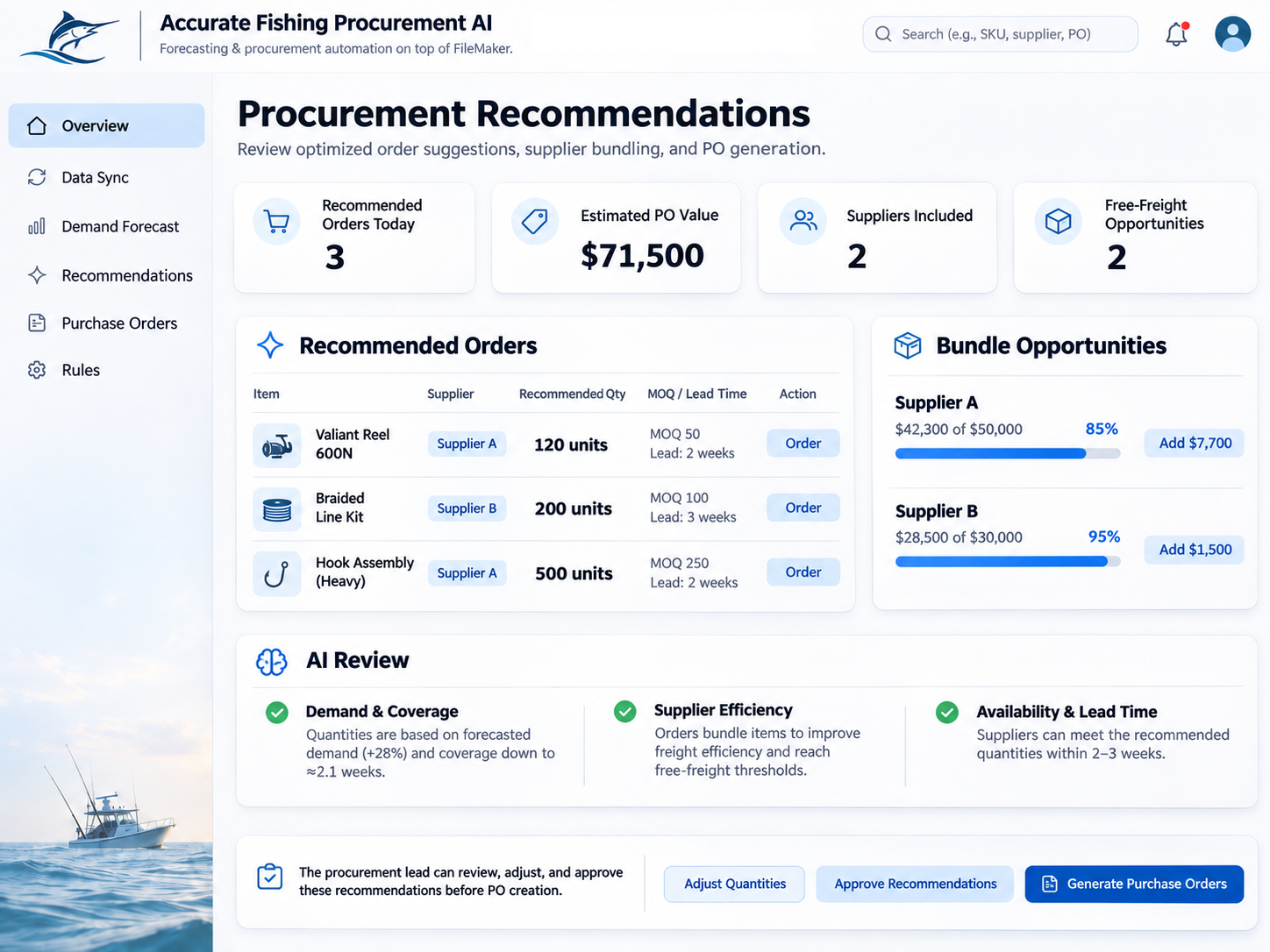
- Configurable Rule Engine: We codified the procurement lead’s tribal knowledge. The system applies dynamic rules for lead-times, MOQs, shipping weight thresholds, and supplier-grouping logic.
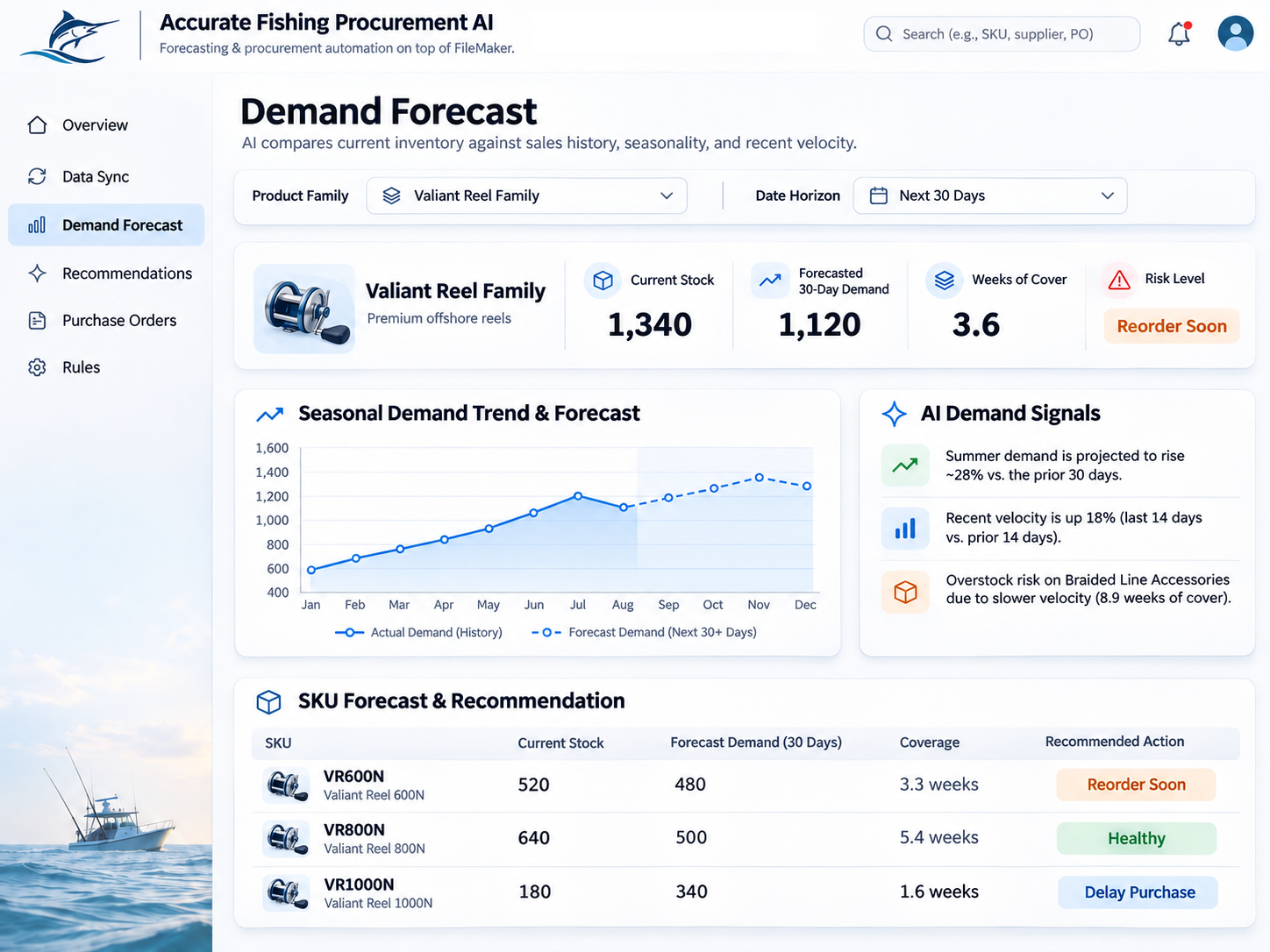
- Predictive Demand Signal: Instead of static minimum thresholds, the AI compares current inventory against historical sales patterns, seasonal fishing peaks, and recent velocity changes.
- Actionable PO Generation: The system synthesizes this data to generate a daily, optimized procurement report. It highlights what to order, from whom, in what quantities, and how to bundle items to hit free-freight minimums. The procurement lead simply reviews the AI’s recommendations, adjusts if necessary, and approves the generation of the Purchase Orders.
The Results & ROI
By transitioning from a reactive, manual process to a predictive, automated one, Accurate Fishing achieved earlier visibility into inventory risk, highly consistent purchasing decisions, and optimized freight consolidation.
The deployment delivered the following measurable impact on their operations:
Key Performance Indicator | Pre-Deployment | Post-Deployment | Impact |
Procurement Cycle Time | 4 to 5 days | < 24 hours | 80% faster turnaround on critical orders. |
Manual Staff Hours | ~25 hours / week | 1 hours / week | 88% reduction in manual spreadsheet compilation. |
Stockout Incidents | Frequent peak-season stockouts | Near zero | 85% reduction in critical component stockouts. |
Rush Order Freight | High expedited shipping costs | Consolidated standard freight | 78% decrease in premium/rush freight expenses. |
Invoice Exceptions | High (due to human error) | Minimal | 60% reduction in PO-to-invoice discrepancies. |